

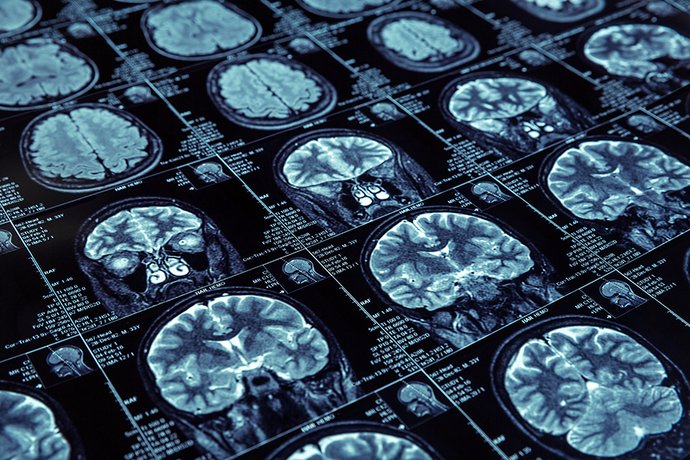
An international study involving the Central Institute of Mental Health (CIMH) shows that depression and anxiety disorders are associated with individual deviations in brain structure that are reproducible at the group level. The analysis of more than 50,000 MRI scans offers a possible explanation for why no clear biological marker for these disorders has been identified to date. The results have now been published in the journal Molecular Psychiatry.
Large datasets offer new insights into the brain
Depression and anxiety disorders are among the most common mental health conditions worldwide. Yet it remains unclear why, despite decades of research, no clear changes in the brain have been identified that reliably characterize these conditions. An international study involving the Central Institute of Mental Health (CIMH) now offers a possible explanation. Using artificial intelligence methods, the researchers were able to show that while people with depressive or anxiety symptoms exhibit measurable deviations from the typical brain structure of the general population, these deviations vary greatly from person to person. At the same time, the deviations follow common patterns at the group level that can be detected in large population studies. The study was based on more than 50,000 MRI scans from the German National Cohort (NAKO) and the UK Biobank, two of the largest population-based research projects worldwide.
The more severe the symptoms, the greater the deviations
The researchers analyzed the brain structures of participants in the German National Cohort (NAKO) and the UK Biobank using an AI-based method. Unlike many previous studies, the method did not look for individual regions of the brain that stood out, but rather identified complex patterns across the entire brain. The results showed that the more severe the symptoms of depression or anxiety were, the more frequently brain structures deviated from patterns observed in the asymptomatic general population. At the same time, these deviations varied considerably from person to person. According to the researchers, it is precisely this diversity that could explain why no clear biological marker for depression or anxiety disorders has been found to date.
“Using modern AI techniques, we were able to identify subtle differences in brain structure that often go unnoticed with traditional analysis methods. This allows us to better describe how mental illnesses can manifest differently at the biological level,” says Julius Wiegert, a research associate at the Hector Institute for Artificial Intelligence in Psychiatry (HITKIP) at the CIMH and the study’s lead author.
Common Patterns in Depression and Anxiety
Despite significant individual differences, the researchers also identified common patterns. The patterns of brain structural abnormalities were largely similar among people with symptoms of depression and anxiety. In contrast, individuals with high alcohol consumption exhibited markedly different patterns.
“Our findings show that depression and anxiety are not linked to a single characteristic change in the brain. Instead, we observe individual patterns of abnormalities that can nevertheless be identified at the group level,” says Prof. Dr. Emanuel Schwarz, director of HITKIP at the CIMH and the study’s last author.
The analyses suggest that symptoms of depression and anxiety are associated with similar patterns of structural brain abnormalities. According to the researchers, these findings support so-called transdiagnostic approaches, which view mental illnesses more in terms of shared characteristics and mechanisms than in terms of rigid diagnostic boundaries.
Background: German National Cohort (NAKO) and UK Biobank
For the study, data from two of the world’s largest health studies were analyzed.
The German National Cohort (NAKO) is Germany’s largest long-term population study. Since 2014, more than 200,000 randomly selected individuals have been undergoing medical examinations and being surveyed about their lifestyle habits at 18 study centers. The aim of the study is to investigate the causes and risk factors of common diseases and to develop approaches for prevention and early detection.
The UK Biobank is one of the world’s largest biomedical research databases. It contains health data from approximately 500,000 people in the United Kingdom. For the present study, MRI data from nearly 25,000 participants were analyzed.
In total, the researchers analyzed more than 50,000 MRI images from both cohorts.
Publication
Wiegert, J., Marty-Lombardi, S., Oweda, J. et al. Breaking the norm: population-scale deviations of brain structure in depression and anxiety. Mol Psychiatry (2026). doi.org/10.1038/s41380-026-03691-4