

Genetic Epidemiology in Psychiatry
Head
Acting Head of the Department of Genetic Epidemiology in Psychiatry | Head of the ZIPP Biobank
PD Dr. Stephanie Witt
Phone: +49 621 1703-6056
Laboratory Building, 4th Floor, Room 4.12
Office: Mariana Espinola
Phone: +49 621 1703-6052, e-mail
Laboratory Building, 4th Floor, Room 406
Description
The Department of Genetic Epidemiology in Psychiatry researches the biological and environmental basis of psychiatric disorders as well as their interaction and the genetic basis of therapy response (pharmacogenetics). As psychiatric-genetic research touches on a large number of ethically sensitive issues, the department also deals intensively with the ethical questions of this research.
Phenotype characterisation
The department has one of the largest phenotype databases with comprehensively characterised samples of patients with psychiatric disorders, their relatives, as well as controls and individuals from the general population. These are analysed by the department in large population-based samples. In addition, intermediate phenotypes and endophenotypes of psychiatric disorders and their genetic basis are investigated in a number of co-operations with partners from the CIMH, nationally and internationally.
Biobank
A comprehensive collection of biomaterials is a prerequisite for psychiatric-genetic research. The biomaterials are used to research biomarker panels which, due to their higher information content, are able to depict complex biochemical networks and therefore have a potentially greater benefit for diagnosis, prognosis and treatment. Blood, saliva, DNA, mRNA, plasma, serum, hair and urine are stored in the biobank of the Centre for Innovative Psychiatry and Psychotherapy Research (ZIPP). These are biomaterials from all patients, relatives and controls recruited by the department and co-operation partners, as well as from people from the general population.
At the same time, the biobank offers advice on applications, sample handling, data protection and ethical and legal standards. Biobank: CIMH Mannheim
The biobank is an observer in the German Biobank Alliance (GBA)
Genetic analyses
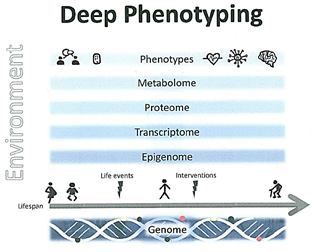
The department's research focusses on the search for correlations between genetic risk factors for psychiatric disorders and clinical symptoms and progression. Different types of data such as genomics, epigenomics, transcriptomics and proteomics are investigated and integrated into ‘multi-omics’ analyses. A new focus is on analyses at the single-cell level.
Biostatistical analyses
A wide range of state-of-the-art statistical and bioinformatics methods are used to analyse the genetic, epigenetic and phenotypic data. These include single and multi-omics analyses, in which the information from several omics data sources is integrated, thereby improving the understanding of the underlying molecular mechanisms and the prediction of the outcome measure. Standard procedures also include polygenic risk scores, which reflect a person's genetic predisposition to a particular trait or disease.
Performing biostatistical analyses is very time-consuming and computationally intensive, which is why expertise in many areas is indispensable. This cannot be achieved by a group working in isolation. The department is therefore heavily involved in international co-operations. The people in charge of the analysis are members of the Statistics Working Group of the Psychiatric Genomics Consortium (PGC) and the Parent and Children Epigenetics Consortium (PACE), among others, and are in active dialogue with other experienced analysts worldwide and are continuously learning about current methods and procedures. Our group has also established the International Personality Disorder Genomics Consortium.
Ethical implications
As this research has many ethical, legal and social implications, the department also addresses these issues. In addition to theoretical questions, the department also addresses the practical solution of these questions in the research context, such as the optimal information of patients or data protection. A key focus here is also on the discussion and harmonisation with the procedures of other national and international cooperation partners, keyword: ‘Global Science-Global Ethics’.
The department works together with representatives of various disciplines, e.g. with lawyers, ethicists, philosophers, patient representatives, is an active member of the Task Force on Genetic Testing of the International Society of Psychiatric Genetics, advises on ethics in national (e:Med Systems Medicine: Data Protection and Ethics, TMF e.V.: Biomaterial Databases) and EU projects (Imagemend, PRISM, MiND) and plays a leading role in the BMBF e:med working group on data protection and ethics.
Prof. Dr. Ole A. Andreassen, Institute of Clinical Medicine, University of Oslo, Norway
Dr. Markus Baumgartner, Institute of Forensic Medicine, Universit of Zurich, Switzerland
Prof. Dr. Dr. Konrad Beyreuther, Network Aging Research (NAR), University of Heidelberg
Dr. Dr. Elisabeth Binder, Max-Planck-Society, München
Prof. Dr. Sven Cichon, University Basel, Switzerland
Prof. Dr. David Collier, William Harvey Research Institute, Barts and The London, UK
Prov.-Doz. Dr. med. Joachim Cordes, LVR-Clinic Düsseldorf
Prof. Dr. Dr. Udo Dannlowski, Department of Psychiatry, University Münster
Prof. Dr. Maria Grigoroiu-Serbanescu, Medical University Bucharest, Romania
Lejla Hasandedić, Akdeniz University, Ankara, Turkey
Dr. Patrick Jern, Department of Psychology and Logopedics, Abo Akademi University, Turku, Finland
Prof. Dr. Rudolf Kaaks and Prof. Dr. Hermann Brenner, German Cancer Research Center, (DKFZ) Heidelberg
Prof. Dr. Tilo Kircher, University Clinic of Psychiatry and Psychotherapy, University of Marburg
PD Dr. Dirk Lanzerath, German Reference Centre for Ethics in the Life Sciences (DRZE) Bonn
Prof. Dr. Nick Martin, QIMR Brisbane, New Zealand
Prof. Dr. Fermin Mayoral Cleries, Institute of Biomedical Research, Malaga, Spain
Prof. Dr. Peter McGuffin, Institute of Psychiatry, King’s College London, UK
Professor Ole Mors, Prof. Dr. Preben B. Mortensen und Dr. Christiane Gasse, Abteilung für Psychiatrie, Aarhus Universität, Dänemark
Prof. Dr. Hossein Najmabadi, Universität für Soziale Wohlfahrt und Rehabilitationswissenschaften (USWR), Teheran, Iran
Prof. Dr. Markus Nöthen, Institute of Human Genetics, University Clinic, Bonn
Prof. Dr. Stephan Ortner und Prof. P.P. Pramstaller, Europäische Akademie Bozen, Italien
Dr. Lilijana Oruc, Universität Sarajevo, Bosnien und Herzegowina
Prof. Dr. Dan Rujescu, Universitätsklinikum Halle
Dr. Christoph Schickhardt und Dr. Romy Kirsten, NCT, Universität Heidelberg
Prof. Dr. med. Peter Schirmacher, Pathologisches Institut, Universität Heidelberg
Prof. Dr. Thomas Schulze und Prof. Dr. Peter Falkai, LMU München
Prof. Dr. Ze’ev Seltzer und Prof. Dr. James L. Kennedy, Universität von Toronto, Kanada
Prof. Dr. Birgit Spinath, Institute of Psychology, Universität Heidelberg
Prof. Dr. Kári. Stefánsson, Decode Genetics, Island
Dr. med. Patrick Sullivan, Abteilung für Genetik, Universität von North Carolina, USA
Prof. Dr. Moshe Szyf, Abteilung für Pharmakologie und Therapie, McGill Universität, Kanada
Prof. Dr. theol. Klaus Tanner, Wissenschaftlich-Theologisches Seminar, Universität Heidelberg
Dr. Alexander Varzari, Institute für Phthisiopneumologie, Kishinev, Moldawien
Prof. Dr. Dr. Henrik Walter, Dr. Dr. Stephan Ripke und Prof. Dr. Dr. Andreas Heinz, Charité Berlin
Dr. James Walters, Institut für psychologische Medizin und klinische Neurowissenschaften, Cardiff Universität, UK
Prof. Dr. Dr. Erich Wichmann, Helmholtz-Zentrum, München
Prof. Dr. Georg Winterer, Medizinische Fakultät, Universität Düsseldorf


Zentralinstitut für Seelische Gesundheit (ZI) - https://www.zi-mannheim.de