

The Central Institute for Mental Health (CIMH) is renowned for its internationally outstanding research and pioneering treatment approaches in psychiatry and psychotherapy, child and adolescent psychiatry, psychosomatics, and addiction medicine. It is well-connected within the research community in Baden-Württemberg and throughout Germany and ranks among the leading institutions for neuropsychiatric research in Europe.
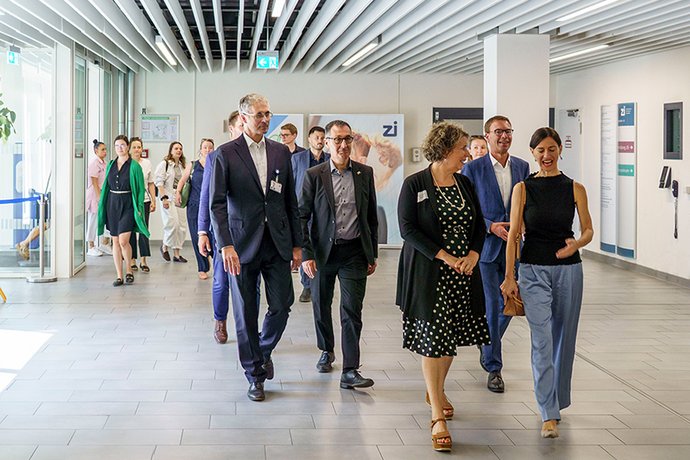
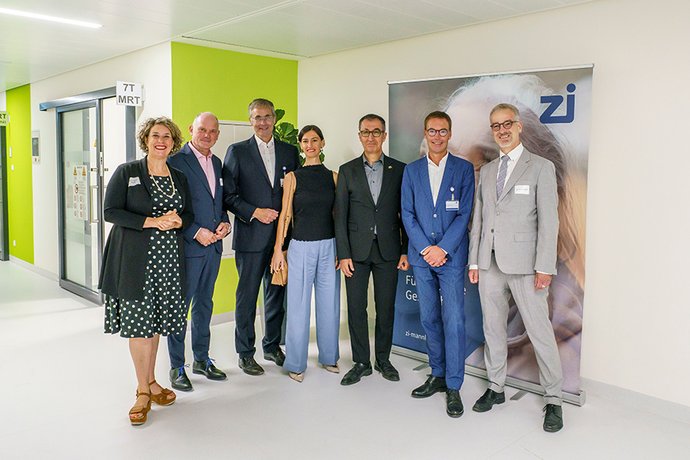
As part of his summer tour of Baden-Württemberg, Minister President Cem Özdemir visited the CIMH in Mannheim. In discussions with the Executive Board – Professor Dr. Andreas Meyer-Lindenberg and Andreas-W. Möller – as well as CIMH staff, the focus was, among other things, on the importance of mental health for the population and for Baden-Württemberg.
“The CIMH in Mannheim impressively demonstrates that cutting-edge research and quality care are not mutually exclusive. It is a successful example of how new findings reach patients quickly and directly,” said Minister President Özdemir. “Mental illnesses affect many people in our society – which makes it all the more important that we have one of the strongest centers for research and treatment here in Baden-Württemberg. My thanks go to the entire team here in Mannheim for their valuable work.”
Climate change, as well as shifting economic conditions, are creating new challenges for people with mental illness, as well as for healthcare providers and hospitals. As a foundation of the State of Baden-Württemberg and an integrated research and treatment center, the CIMH provides scientifically sound insights into current and future challenges. It also develops new therapies and prevention strategies and implements them in practice.
Another topic of discussion was the traumatization of children and adolescents, as well as options for prevention and treatment. The CIMH possesses comprehensive expertise in this field, which is of great relevance to society: In addition to studies conducted by the CIMH that have investigated the extent, causes, and effects of sexual abuse and sexualized violence, the institute operates a pilot project for the treatment of young people with trauma-related disorders. Here, the CIMH takes a cross-sectoral approach, offering flexible outpatient and inpatient treatment tailored to individual needs.
Professor Dr. Andreas Meyer-Lindenberg emphasized: “By seamlessly integrating patient care and research, we are finding new ways to improve mental health, particularly among the young and working-age population.” Andreas-W. Möller, Chief Financial Officer, pointed out the increasingly severe financial challenges currently facing the entire healthcare system – and psychiatry and psychotherapy in particular. He recommended a holistic approach that focuses more strongly on the quality of care: “Regulatory requirements and our administrative burden are constantly increasing. We need a more comprehensive view of the benefits of innovative treatment approaches and greater flexibility, especially in terms of financing.” As an example, he cited cross-sector care based on regional budgets, which are recognized for their ability to improve the quality of care and provide significant health economic benefits. However, they are currently very difficult to implement.