
The Hector Foundation II is providing funding for the Hector Institute for Translational Brain Research (HITBR)—which has research groups at the Central Institute of Mental Health (CIMH) and the German Cancer Research Center (DKFZ)—for another ten years. With total funding of over 46 million euros, the foundation aims to ensure that findings from basic research on brain disorders continue to be consistently translated into clinical applications.
From Basic Research to Specific Treatments
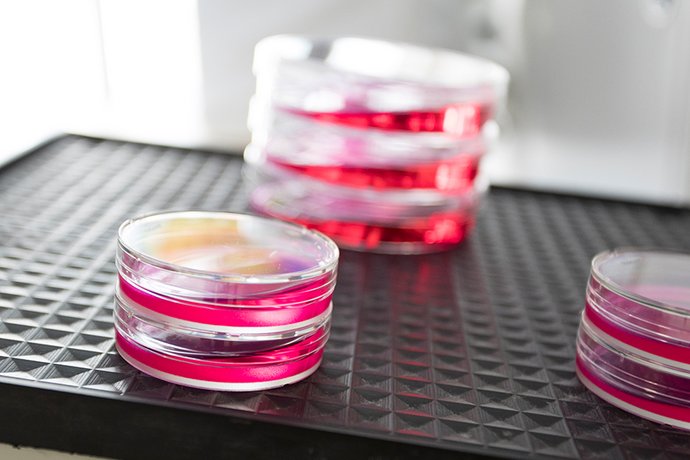
Scientists at HITBR are exploring new ways to study brain disorders—including mental health conditions and brain tumors. Their goal is to gain an even better understanding of the mechanisms underlying these diseases and, based on this understanding, to develop new, targeted treatments. To this end, they are utilizing the ability to reprogram human stem cells into nerve cells and use them to create brain models in culture dishes. This development was made possible by the generous support of the Hector Foundation II and its founders, Dr. h. c. Hans-Werner and Josephine Hector, as well as by the partnership between the CIMH and the DKFZ. Concrete therapies have already emerged from this basic research. For example, the finding that young people with autism and a specific genetic defect (MYT1L gene) benefit from the drug lamotrigine is directly attributable to research results from HITBR.
Since its founding, the institute has developed into an internationally recognized research center, having secured more than 7.5 million euros in external funding, published in high-impact journals, received prestigious research awards, established industry partnerships, and filed patent applications. “The Hector Foundation is pleased with the successful work in this new field of therapeutic and basic research and is happy to continue supporting it in the long term,” says Dr. h. c. Hans-Werner Hector, Chairman of the Board of the Hector Foundation II.
Successful collaboration benefits patient groups facing significant challenges
HITBR is dedicated to two highly vulnerable groups: people with mental illness, who are often stigmatized and socially marginalized, and brain tumor patients, who are frequently severely impaired by their life-threatening disease. Through personalized treatment approaches based on individual molecular profiles, the goal is to improve treatment outcomes, reduce medication side effects, and significantly enhance the quality of life for patients and their families.
Professor Dr. Andreas Meyer-Lindenberg, Chairman of the Executive Board of CIMH and Co-Executive Director of HITBR, highlights the fruitful collaboration between CIMH and DKFZ: “This cross-institutional cooperation has created and harnessed synergies that are rare in the German research landscape. Our complementary areas of expertise, united by a common mission, demonstrate how targeted and visionary funding can overcome scientific boundaries and open up new horizons for research.”
Professor Dr. Michael Baumann, Chairman of the Board of the DKFZ, also emphasizes the value of this collaboration: “The close, interdisciplinary connection between cutting-edge psychiatric and oncological research opens up new avenues for us to directly apply findings from stem cell research to benefit patients. This is exactly the kind of cooperation needed to truly understand complex brain disorders.” Professor Dr. Dr. h. c. Katrin Amunts, Chair of the HITBR Scientific Advisory Board, praises the consistent work carried out since the institute’s founding: “Since 2018, the researchers at HITBR have very successfully brought the vision behind HITBR to life. We on the Scientific Advisory Board are convinced that the next ten years will also be a success story.”
A seamless pipeline from the basics to treatment
The long-term funding from 2028 to 2037 will enable researchers at HITBR to cover the entire process, from discoveries in basic research to clinical trials of a new therapy. At the same time, the institute will be able to expand the necessary structures for staff development, collaborations, and international visibility. “Our goal is to establish a seamless pipeline from basic discovery to treatment that can also serve as a model for other institutes worldwide,” says Endowed Professor Dr. Philipp Koch, Co-Executive Director of HITBR.
Three New Building Blocks for Clinical Translation
For the third funding period, HITBR is planning three new areas specifically designed to support the transition from research to treatment: A preclinical-clinical collaboration platform is intended to bring new active substances into clinical use—such as hallucinogenic medications for depression or therapies based on the hormone oxytocin. New molecular therapeutic approaches and gene therapies will also be modeled and tested on patients, in collaboration with the Hector Institute for Cancer Research, among others. A cell bank will collect blood cells from patients and use them to generate cell lines for targeted therapy development. And in collaboration with the Hector Institute for Artificial Intelligence in Psychiatry (HITKIP), which is based at the CIMH, AI will in the future help match disease-specific cellular changes with known mechanisms of action and assign active substances to the appropriate patient groups—another step toward precision medicine guided by disease mechanisms.
About HITBR
Stem cell technology opens up new avenues for neuroscience research into diseases of the human brain. By reprogramming skin or blood cells into induced pluripotent stem cells (iPS cells) and subsequently differentiating them into nerve and glial cells, disease-causing mechanisms and potential therapies can be tested directly on the affected cell populations in the patient’s brain. The Hector Institute for Translational Brain Research (HITBR) was founded in 2018 as a joint project of the CIMH, the German Cancer Research Center (DKFZ), and the Hector Foundation II. The goal of the HITBR is to identify new molecular and functional targets for the treatment of severe psychiatric disorders and brain tumors.