

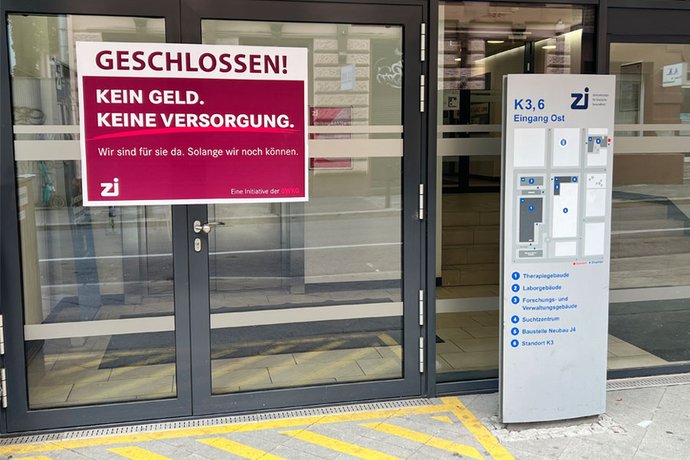
The federal government aims to cut further costs in the healthcare sector through the German Health Insurance Contribution Stabilization Act (Beitragsstabilisierungsgesetz). On June 12, more than 130 hospitals in Baden-Württemberg will protest under the slogan “We are here for you. As long as we still can,” opposing the bill and calling for changes—including the Central Institute for Mental Health (CIMH). If the law were to take effect in its current form, it would result in rising personnel costs without adequate funding, an increased burden on staff, more bureaucracy, and poorer medical care. Psychiatric and psychotherapeutic clinics and their patients, in particular, would be hit hard by the Contribution Stabilization Act in its current form.
Treatment is no longer based on medical need
Under the proposed changes, psychiatric and psychotherapeutic care will no longer be based on medical need, but solely on fluctuations in premium revenue from statutory health insurance. However, since the overall need for treatment of mental illnesses is increasing, this jeopardizes the well-being of patients. In the long term, costs could even rise, as early intervention is generally more cost-effective than treating long-standing, chronic conditions. The German Health Insurance Contribution Stabilization Act is also likely to lead to a decline in short-term outpatient psychotherapy. Combined with the fee cuts for psychotherapists that have already been approved, it will thus be virtually impossible to maintain the current level of psychotherapeutic care.
“Anyone who wants to stabilize the public health insurance system in the long term must ensure that care is improved and resources are used efficiently. We need structural reforms with long-term effects. Given the current strained economic situation, it is understandable that policymakers are looking for short-term savings opportunities. However, they should also ensure that the burden is distributed fairly. Unfortunately, this is not the case with the German Health Insurance Contribution Stabilization Act,” says Prof. Dr. Andreas Meyer-Lindenberg, Chairman of the Board of the CIMH.
Calls for greater flexibility
Psychiatric and psychotherapeutic professionals have long since put forward sustainable, cost-effective, and proven proposals for reforming healthcare delivery. For example, the introduction of so-called global budgets would enable hospitals to tailor their care offerings more flexibly to patients’ actual needs and overcome rigid sectoral boundaries between outpatient, day-care, and inpatient treatment. This could lead to better care at the same or even lower costs, as inpatient stays could be avoided or shortened and outpatient services strengthened. General hospitals, represented by the Baden-Württemberg Hospital Association (BWKG), have also submitted proposals on how the German Health Insurance Contribution Stabilization Act should be amended.
By symbolically closing its entrance on June 12, the CIMH is drawing attention to the fact that psychiatric care for the people of Mannheim is threatened by the German Health Insurance Contribution Stabilization Act. Together with other hospitals in Baden-Württemberg, the CIMH is calling for changes to the draft legislation and secure funding for the care of people with mental illnesses.